In this article
Coordination does not require a whole roster
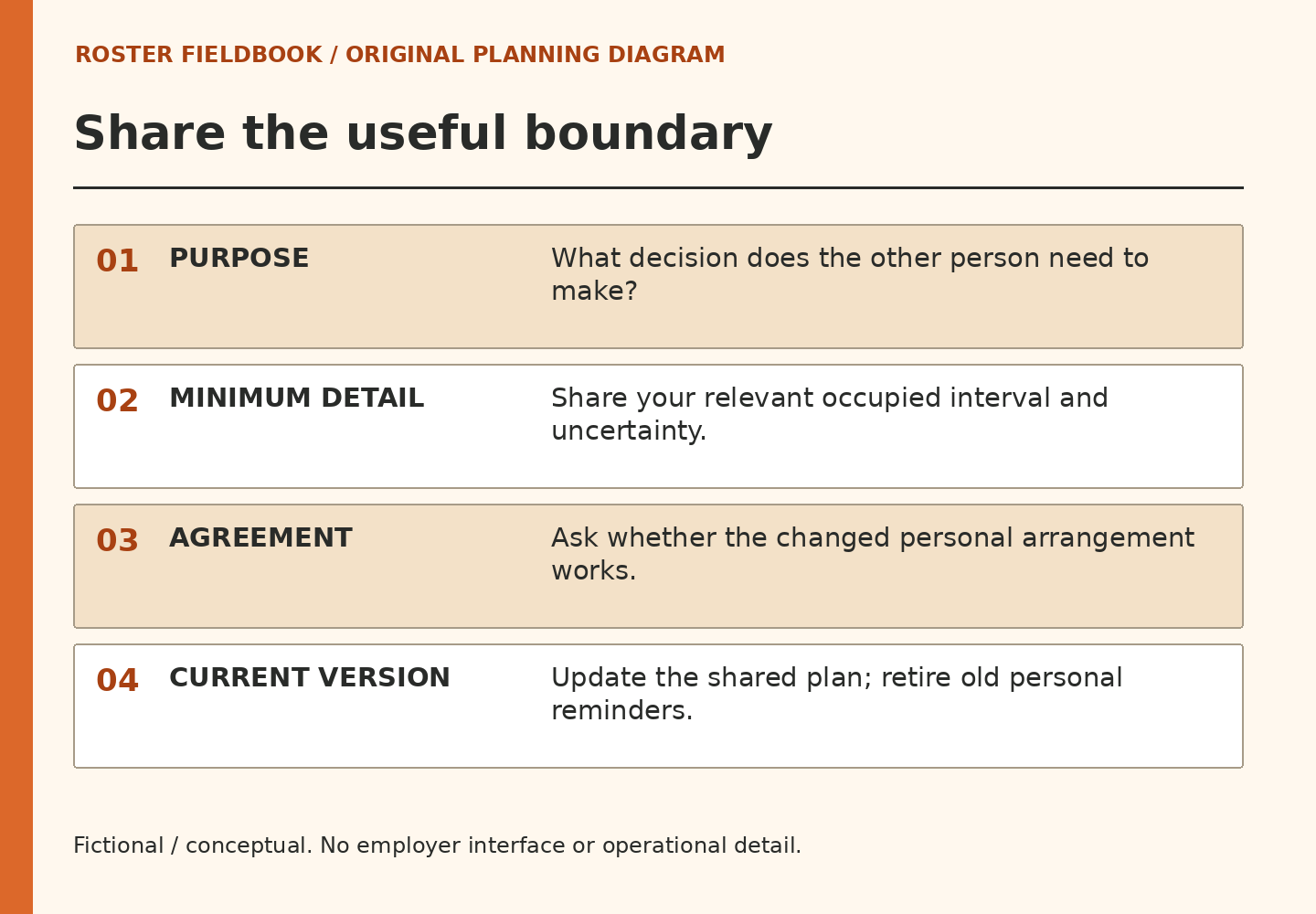
A person coordinating dinner, a shared errand or a ride usually needs your relevant occupied periods and any uncertainty. They do not usually need a screenshot showing other employees, internal labels or detailed work locations. A limited personal summary can make the useful information easier to find while keeping unrelated records where they belong.
Start with the decision the other person needs to make. If they are choosing when to use a shared vehicle, the relevant boundary may be when you need it and when you expect to return it. If they are planning a shared meal, they may need an approximate availability window. Different decisions need different summaries.
Include status and revision time
A concise fictional note might say, “Current personal plan: occupied until early evening; return time still being checked; I will update the shared plan after confirmation.” It communicates what is known without pretending that an estimate is final. Do not use an actual workplace schedule in a public practice tool.
Include enough context to distinguish a new version from an old one. “Updated Tuesday afternoon” is often clearer than sending another unlabeled screenshot. The purpose is not to create an archive of someone’s movements. It is to prevent a person from acting on an older arrangement after a meaningful change has been confirmed.
Ask instead of assigning
If a changed work commitment affects another person, ask whether the proposed adjustment works for them. A gap in their calendar is not permission to hand them an errand. A useful request names the practical effect and the decision needed. It leaves room for the other person to say that the alternative is not available.
In an invented example, a later return would make a shared pickup difficult. The next action is to check an alternative arrangement, not silently assume a housemate will cover it. Until someone agrees, the pickup remains unresolved. Marking it pending protects both people from treating a possibility as a promise.
Keep one shared version current
A shared calendar, a message or a paper note can each work if the people involved know which one to use. Several competing copies create more work. Choose an ordinary coordination method together and update only the relevant information. This does not require granting anyone access to an employer account or sharing credentials.
Before closing the loop, ask three questions: what changed, who relies on it and has that person received the necessary update? An update is useful when it supports a decision, not merely because a new detail exists. Leave internal work records and private personal explanations out of the summary. A short note with an accurate status can carry more practical value than a complete document that mixes confirmed information with assumptions. Revisit the summary after the authoritative work details change, then remove obsolete personal reminders so they do not compete with the current plan.
Evidence and boundaries
This article is an original planning exercise using invented examples. It does not report private employer procedures or an individual employee’s experience.
Roster Fieldbook is independent of Allied Universal. Actual assignments, approvals and requirements must be confirmed through verified official channels. No extra hours, pay or other outcome is guaranteed.
Continue with Write a Schedule-Change Note You Can Reconcile or try the Offer Fit Sketch.