In this article
Capture the difference
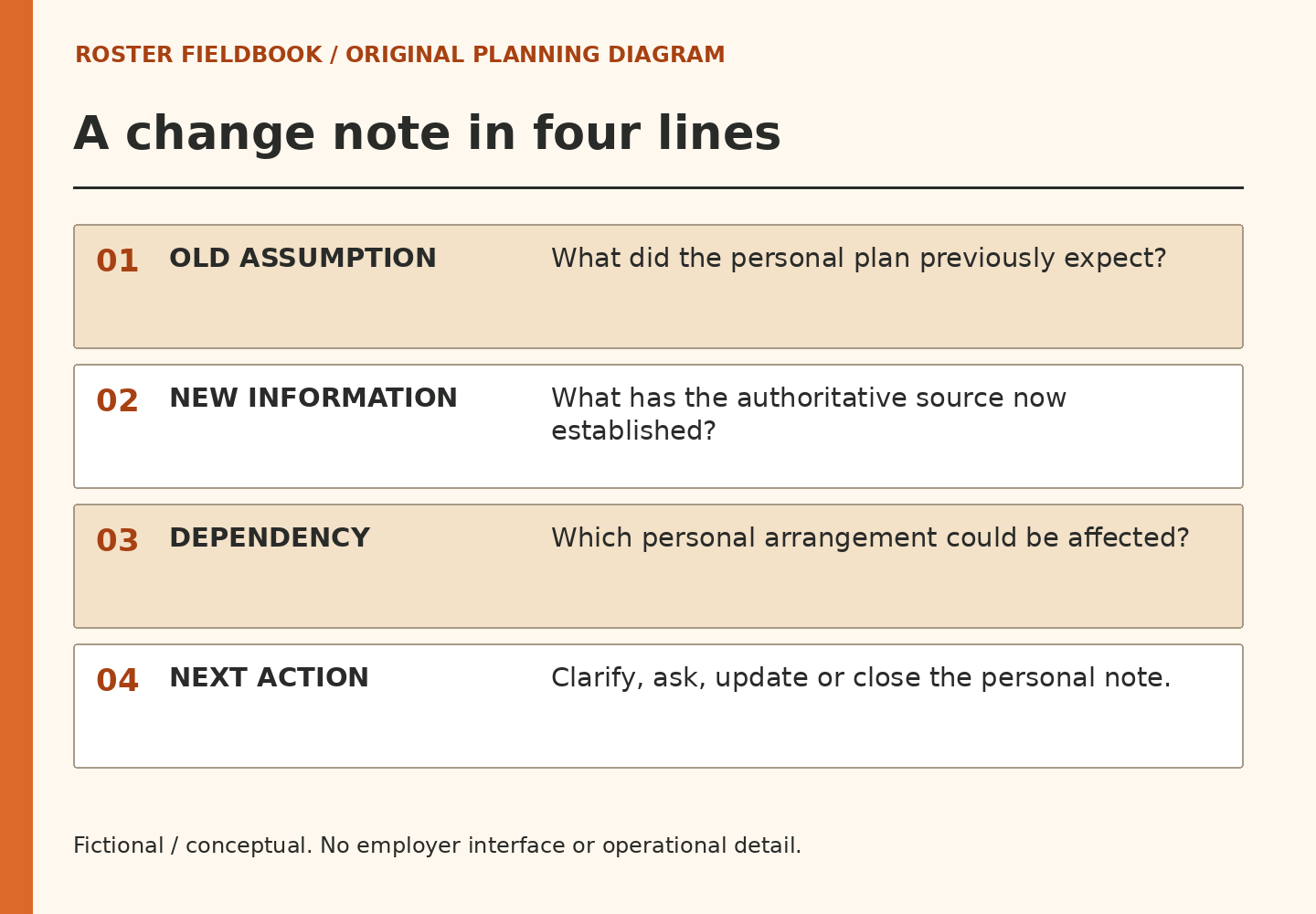
When a timing changes, rewriting an entire week can obscure the detail that matters. A change note focuses on the difference: what the personal plan previously assumed, what the verified information now establishes and which next action follows. It is a lightweight aid for your own planning, not a replacement for an official work record.
Use an invented example to practice. A commitment that was expected to finish in the afternoon is now confirmed to finish later. The important change is not just the new endpoint. It is the effect on the return journey and the personal arrangement that follows. A useful note connects those effects without collecting unnecessary workplace detail.
Separate evidence from interpretation
The verified detail belongs in one sentence. Your interpretation belongs in another. “The end time has changed” is different from “I may need a different ride.” Keeping those statements separate makes it easier to correct the plan if the interpretation turns out to be wrong. A possible consequence should not acquire the appearance of an official instruction.
For an actual issue, use the employer’s verified channels to resolve unclear or conflicting details. Do not rely on an unofficial article to decide whether a change has been approved. If you cannot tell which record applies, label the note unresolved and ask a focused question. Avoid forwarding private screenshots when a minimal description will do.
List dependencies in order
Work outward from the changed detail. First comes the immediate dependency, such as departure. Next comes the journey. Then comes the personal commitment or shared arrangement affected by arrival. This order helps distinguish a direct conflict from an assumption that needs checking. It can also reveal that a feared conflict disappears once one detail is clarified.
In the fictional example, a later departure does not automatically cancel the evening plan. Perhaps the journey is shorter at the new time, or perhaps the other person can adjust. Neither possibility should be assumed. The note should identify the question and the person whose agreement is required rather than deciding on their behalf.
Close the note with a state
A change note should end in a clear state: resolved, waiting for clarification or waiting for someone’s agreement. If resolved, update the current personal calendar and retire the superseded reminder. If pending, record the next appropriate review point. This is not a recommendation to monitor work communications continuously while off duty; follow the applicable expectations for actual work communication.
Try the method on a harmless fictional event first. Write no more than four lines: old assumption, new information, affected arrangement and next action. If the note becomes a page long, separate background explanation from the immediate coordination task. The goal is not perfect documentation. It is a plan that can be reconciled after a change, with no hidden assumptions about approval or other people’s availability. Keep any real operational instructions in their authorized systems, outside the exercise.
Evidence and boundaries
This article is an original planning exercise using invented examples. It does not report private employer procedures or an individual employee’s experience.
Roster Fieldbook is independent of Allied Universal. Actual assignments, approvals and requirements must be confirmed through verified official channels. No extra hours, pay or other outcome is guaranteed.
Continue with Give Notifications a Place in the Plan or try the Offer Fit Sketch.