In this article
The return is its own journey
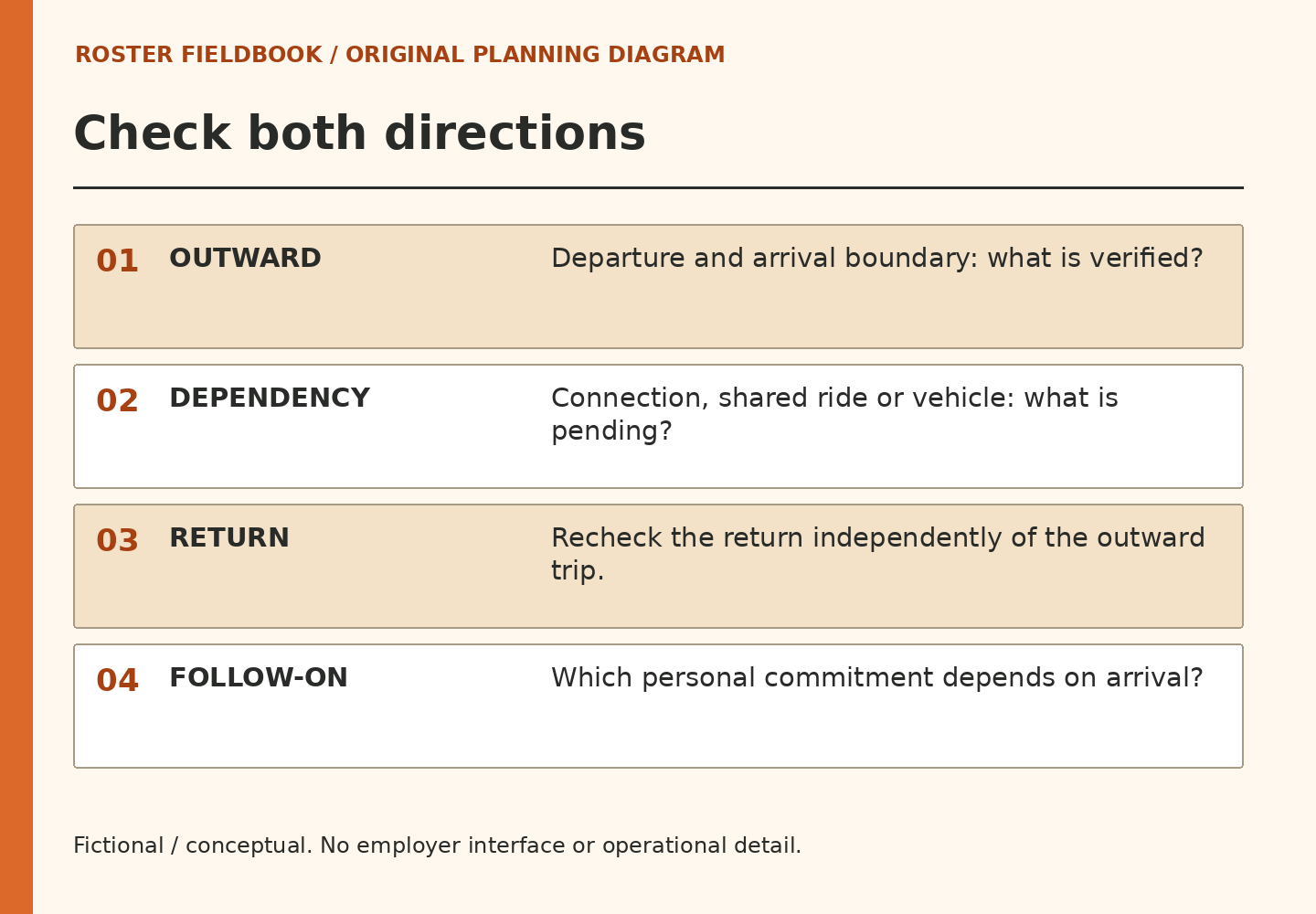
A workable outward trip does not establish a workable return. Timetables, shared rides and other personal commitments can differ across the day. Treat each direction as a separate planning question, then connect them to the work interval. This is a general calendar exercise; no local route, fare or service has been checked for a reader.
Begin with an invented location and generic travel times. Write the outward departure, arrival boundary, departure after the commitment and arrival home. The four points reveal where the assumptions sit. If one point is an estimate, label it. A detailed line on a calendar is still only an estimate when its source has not been checked.
Find the dependency that matters
A journey may depend on a particular connection, a person’s agreement or access to a vehicle. Identify that dependency rather than merely adding an average travel duration. In a fictional transit example, a missed connection could move the arrival by thirty minutes. The relevant planning question is when the next service operates, not whether the original journey looked short.
For a shared ride, the important unresolved item may be another person’s availability. “Could possibly drive” and “has agreed to this time” should not appear identical in the notebook. Use a pending marker until the arrangement is actually confirmed. Do not publish anyone’s route, home address or routine to explain the example.
Keep the fallback honest
A backup is useful only if it is feasible in the circumstances. An option that has not been checked is a question, not spare capacity. The invented plan can list one possible alternative with the information needed to evaluate it. This avoids creating a false sense that every disruption has already been solved.
If a journey changes, review the next commitment after arrival. Moving the travel block alone can conceal a conflict later in the day. A simple dependency arrow is enough: return journey leads to personal appointment. If the first element slips, the second needs attention. The arrow does not decide whether the appointment can move; it identifies who needs an update.
Recheck at the useful moment
Travel information should be checked through current appropriate sources when needed. A saved estimate is not a live service update. Use official transport information and verified arrangements for actual journeys. This publication supplies no navigation instructions and makes no claim about a route’s safety or reliability. An arithmetic margin cannot resolve a safety concern.
After the fictional exercise, explain the weakest assumption in one sentence. Perhaps the return connection is unverified or the shared ride is pending. That sentence is more actionable than declaring the entire day “probably fine.” The Offer Fit Sketch can compare invented round-trip totals, but it does not model timetables, geography or real-time disruption. Use it to see how a changed assumption affects the total, then take actual travel questions to the sources that can answer them.
Evidence and boundaries
This article is an original planning exercise using invented examples. It does not report private employer procedures or an individual employee’s experience.
Roster Fieldbook is independent of Allied Universal. Actual assignments, approvals and requirements must be confirmed through verified official channels. No extra hours, pay or other outcome is guaranteed.
Continue with Share the Time Your Household Needs or try the Offer Fit Sketch.